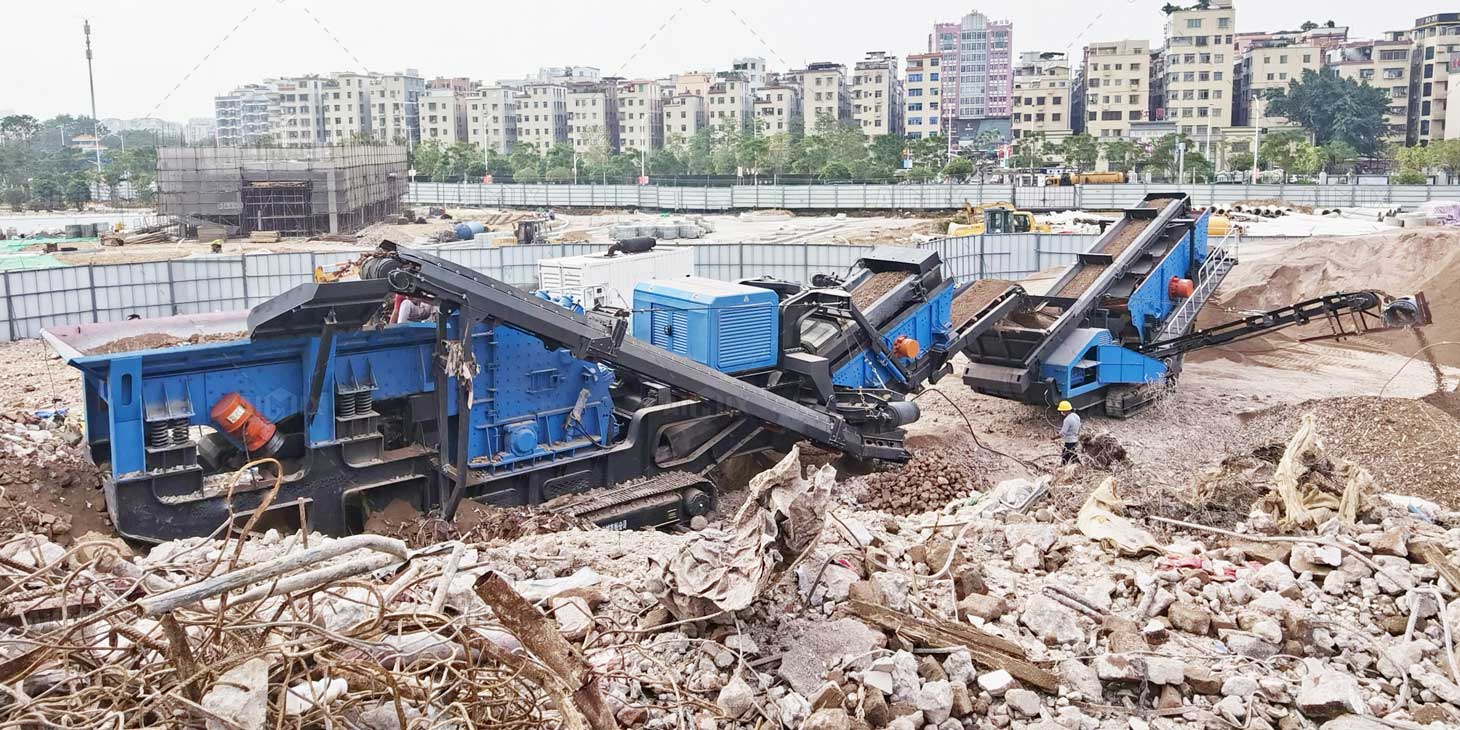
The contemporary jobsite presents a complex matrix of waste materials, each possessing distinct physical properties that demand specific processing methodologies. Demolition debris is rarely homogeneous; it is a chaotic amalgamation of concrete, asphalt, brick, and wood, often commingled in ways that challenge conventional crushing equipment. The efficacy of a track crusher in this environment is contingent upon its adaptability—the capacity to reconfigure its operational parameters to suit the unique characteristics of each waste stream. Modern mobile crushers are engineered with a high degree of versatility, allowing operators to modulate settings, exchange components, and alter configurations to optimize throughput and product quality. This on-site customization is not merely a convenience; it is an operational imperative that determines the economic viability and material purity of the entire recycling endeavor. Understanding how these machines adapt to concrete, asphalt, brick, and wood is essential for any operation seeking to maximize resource recovery and minimize downtime.

## Modulating Parameters for Concrete and Reinforced Rubble
Concrete, particularly when reinforced with steel rebar, represents the most demanding waste stream encountered in demolition recycling. The material’s high compressive strength and abrasiveness necessitate a crushing configuration optimized for sustained impact resistance. Primary jaw crushers employed for concrete must operate with a closed-side setting (CSS) calibrated to liberate the aggregate from the cement paste while avoiding excessive wear on the jaw dies. The toggle plate angle and eccentric shaft speed are critical variables; a slower, more deliberate stroke allows the machine to generate the requisite compressive force to fracture the concrete while preventing rebar from wrapping around the crusher. Furthermore, the integration of a fully independent, vibrating grizzly feeder is paramount. This component scalps off fine material and directs larger pieces into the chamber, while also providing a pathway for the initial separation of deleterious materials like rebar ends. For impact crushers used in secondary concrete reduction, the rotor speed and apron gap must be precisely adjusted to achieve the desired gradation, ensuring that the liberated steel is ejected in a manner that does not damage the internal components.
## Configuring for Asphalt and Bituminous Materials
Asphalt milling and shingle waste present a unique challenge distinct from concrete: the material's inherent plasticity and tackiness. When subjected to heat and friction, asphalt can become gummy, leading to clogging and reduced throughput if the crusher is not properly configured. [Mobile impact crushers](https://aimixgroup.com/stone-crusher-plants/mobile-type/impact-type/) are the preferred platform for asphalt processing due to their ability to shear the material rather than compress it. The configuration requires a careful recalibration of the rotor speed and the reduction ratio. Lower rotor speeds are typically employed to minimize fines generation and reduce the frictional heat that causes bitumen to soften and adhere to the crushing chamber. The blow bars, typically made of high-chrome steel, must be selected for wear resistance against the embedded aggregate within the asphalt. Additionally, the aprons should be set to a wider opening than one would use for concrete, allowing the material to pass through the chamber more freely. Many modern units feature hydraulic apron adjustment, enabling the operator to dynamically change the gap setting while processing, which is invaluable for maintaining consistent product quality as the asphalt's consistency varies throughout the stockpile.

## Specialized Setups for Brick, Block, and Wood Debris
Brick and block debris, while less abrasive than concrete, still requires a thoughtful approach to achieve a clean, usable aggregate. These materials are often more porous and friable, tending to generate excessive fines if crushed too aggressively. A jaw crusher set with a wider CSS can effectively reduce brick and block to a base course material without pulverizing it into dust. However, the most significant operational shift occurs when integrating wood waste into the stream. Wood is a contaminant in aggregate production, yet it is often inextricably mixed with [construction waste recycling](https://aimixgroup.com/construction-waste-recycling-industry/). To address this, track crushers are often configured in tandem with air separation or screening systems. However, some crusher designs incorporate features to mitigate wood inclusion. For instance, impact crushers can be equipped with a "raiseable" or "hydraulic" hood, allowing the crushing chamber to open, facilitating the removal of tangled wood bundles. The velocity at which material is ejected from the rotor can also be tuned; lower velocities allow heavier aggregates to fall while lighter wood particles are carried away by the airflow, effecting a rudimentary separation. This adaptability ensures that even highly heterogeneous feedstocks can be processed into valuable end products, transforming mixed debris into specification-grade materials.

Comments
No comments yet. Be the first to react!